Showing posts with label Nurses Station/Ward. Show all posts

Thursday, February 7, 2013

Day 98 Dalaguete, Cebu #DPC IVTT

I worked the AM shift today and floated between the ER and the floor. It was a pretty routine day. I administered meds via IVTT and prepared the med passes while on the floor and took vitals and helped with OPD's at the ER. It's nice working both the ER and the floor because you get to see how the team works as a unit to give treatment and medication accurately. It's the best feeling admitting someone from the ER and seeing them later at the ward reciving what they're supposed to be reciving -- and almost all of this is done without computers. The only thing they really use the computers for are printing recipiets. There's no electronic medication administration record or treatment administration record; just good old pen and paper.


Pamela also had a dance routine for her school today. Once a year the teachers get together and perform a traditional dance routine for the students in preparation for the annual town fiesta. While my sister was here Pamela asked her to come in as a guest speaker so my sister was able to hang out with her for a day. She told me how the students and teachers have a relationship that's more like uncle and aunt, niece and nephew. I've always been aware that Filipino's are close as a culture, but the way my sister described the schools brings further depth and understanding about that aspect of my culture. The first thing my sister noticed was how the teachers and students have a very relaxed sense of time. Start and end times for classes are not set on a strict schedule. Is it raining hard out? If yes, start class a little later. Is it uncomfortably hot and humid? End class a little bit earlier. Lunch breaks are also very relaxed. My sister said after the lunch period the students went back to the classroom and the teachers took their time discussing their day and their remaining lessons. It sounds disorganized but because the students view their teachers as extensions of their family, they treat them with the same respect they'd treat their relatives. My sister said that after the lunch break she was expecting Pamela to have to come into the classroom and get everyone settled, but when they came in everyone was in their proper spot waiting to learn.

Anyway, here's a picture from the dance routine.


Wednesday, February 6, 2013

Day 97 Dalaguete, Cebu 7 #DPC Wound Care

I worked the AM shift with Tim at the nurses station. The census was pretty low so I just helped out with vitals, prepped the med pass, and assisted with a wound dressing. As usual, I cleaned the wound with PVPI making sure to work from the inside out. The patient had been involved in a MVA and had some minor abrasions that needed cleaning and was being kept for observation to rule out the possibility of a head injury or opportunistic infection. 


The Dalaguete Fiesta will start in the next few days and I'm pretty excited to see what it's like to celebrate the fiesta in our town. I've already been to a bunch of other town's fiestas but Dalaguete's will be special mostly because I'v spent so much time here. It's been slowly filling up with vendors and the whole seems to have a buzz of excitement. The market, especially, has been super busy as families start buying ingredients for upcoming festivities. 

Tuesday, February 5, 2013

Day 96 Dalaguete, Cebu

I worked the noc shift again today and it was another quiet night. No patients came into the ER and the Ward only had  a few patients so there wasn't too much going on. I helped out with vitals and did more catching up on my blog. I'll leave you with pictures of some of my extended family here who have been super awesome at showing me around giving me a more authentic view of the Philippines!


Thursday, January 24, 2013

Day 84 Dalaguete, Cebu #DPC Suture Assist, Sterile Procedures, IVTT

I worked the NOC shift today at the ER and the ward.

The first patient that came in had suffered a head wound after falling down (apparently drinking had been involved). I assisted the doctor during the suturing and helped set up the equipment using sterlie procedures. The doctor was going to release him but the patient couldn't figure out how to sign the paperwork so the doctor had him admitted for overnight observation. The doctor said he was pretty sure that the inability to do the paperwork was due to inebriation, but he wanted to keep him overnight just to be sure. The patient had actually started falling asleep during the suturing and the doctor had to keep rousing him. Luckily he was brought in by friends and they stayed the night to keep an eye on him.

The second patient that came in was suffering from dizziness. The doctor order me to take the blood pressure, which I recorded at 220/100. I'm not quite sure what medication the doctor gave the patient, but he was not previously diagnosed with hypertension so the doctor also had him admitted for overnight observation. Although the patient wasn't previously diagnosed with hypertension, after being here for awhile, my guess is that he most likely does have it and just hasn't come in for routine checkups. Hypertension is extremely common here and most people over the age of 35 are already taking medication to help keep their blood pressure in check.

I set up the sterilized instruments while the
doctor scrubbed up.

Sterilized gloves are only used by the doctor
to save on supplies, so when handing the
doctor instruments, I used sterilized forceps
to pick up and manipulate anything the
doctor needed.  

Even though I was scheduled to just work the ER, I helped out in the ward because the census was at 24. That might not seem like a lot, but there are only 2 nurses; the charge nurse does the paperwork and the floor nurse works the floor. Obviously the charge nurse also works the floor but has the added work of charting everything by hand since there is no computer in the ward. I helped out by taking the vitals and prepping the medication for the entire shift. In order to give medication on time, the nursing staff normally organizes the entire shifts medication so that all they have to do is dilute anything that need diluting just prior to handing it out. I also helped give medications and did a little bit of charting (most of it has to be done by the charge nurse so there wasn't a whole lot I could do other than vitals and I/Os). 

NOC shift meds.


Thursday, January 10, 2013

Monday, January 7, 2013

Day 67 Dalaguete, Cebu #DPC Intradermal skin injection

Today I worked both the AM and PM shift (700-2300).

I spent the AM shift on the ward and it was the same routine as usual: help prep/pass medication and take vital signs.

During the PM shift I switched over to the ER and performed an intradermal skin injection to test for an allergic reaction. Later during the evening an adolescent came in with severe stomach pain. The doctor on duty gave a prognosis of appendicitis in less than five minutes. He asked the patient if he had pain or blood during urination, when the last bowel movement was, and if they had measured a fever (yes for the fever which was confirmed after doing vitals upon entry to the ER). The doctor then began to press down on his stomach in four different areas each time getting closer and closer to the appendix. As soon as he touched the appendix the patient displayed extreme pain and the doctor called for a referral to the city. While waiting for the ambulance, the patient was hooked to an IV, given ranitidine via IVTT, and paracetamol PO.

Monday, December 31, 2012

Day 60 Dalaguete, Cebu

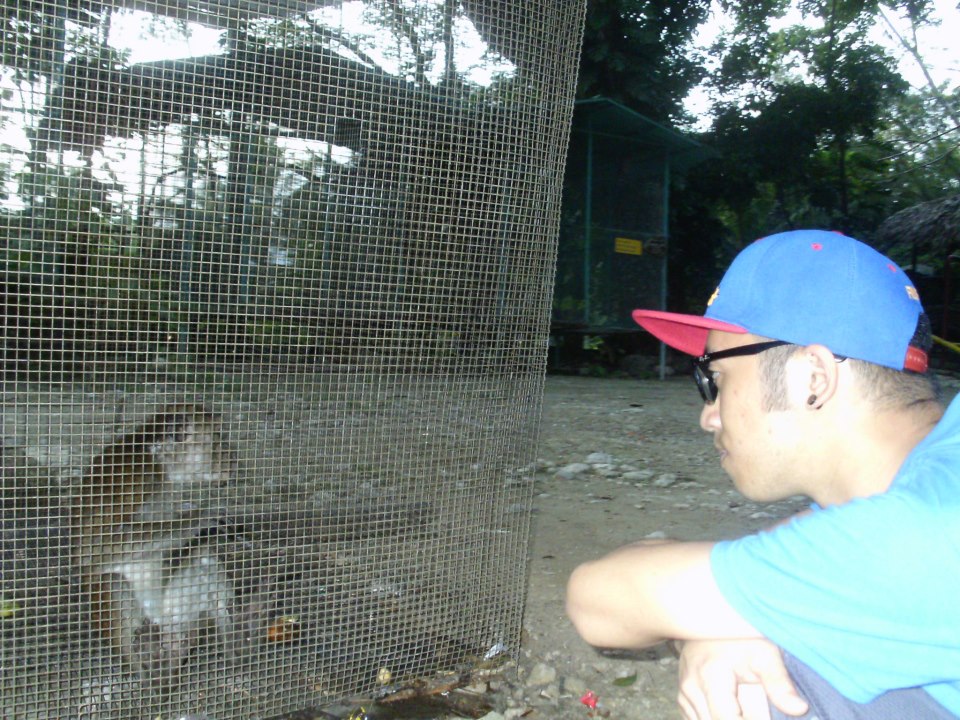
Today I went back to Dalaguete to celebrate New Years. On the way, we stopped by an old church dedicated to the Mother Mary. It was pretty interesting because there were statues of Mary representing different cultures from all over the world: Africa, Asian, American, European, etc. (and of course Filipino). We also stopped by a nature preserve/zoo and saw different types of monkeys and other reptiles. The monkey's you gotta be careful around. I was trying to take a picture of one with my phone and it reached out and tried to grab it -- his hands actually wrapped around my phone but I pulled it back before he could get a good grip on it. Anyway, here's a picture from the zoo (sadly my camera battery was dead so I couldn't take any myself):


Distant relatives? Thanks Shila for the picture!


Here's some footage of New Years:


Here's what it sounds like:

Thursday, December 13, 2012

Day 42 Dalaguete Cebu #DPC IVTT

Routine on the ward today. Nothing out of the ordinary. More IVTTs and whatnot -- a pretty slow day overall. I'll be going to Cebu City tomorrow to spend some time with my cousins. Anyway, here's a picture of me with some of my co-workers during our off-duty time.


Wednesday, December 12, 2012

Day 41 Dalaguete, Cebu #DPC IVTT, IV Removal

Today was another day spent in the ward. I completed the normal tasks: IVTT's medications, syringe loading, vitals, etc. Today, however, was the first time I removed an IV from an infant. It was a little more difficult since the baby is scared and flailing it's arms, but it's basically the same procedure.

For the past month or so, the nurses have been giving me more paperwork to do and just countersign everything I do. It's interesting learning how to chart in a hospital setting. For example, when charting for vitals, I have to plot graphically the temperature and heart rate. This is so when the doctor looks at the chart of the patient, they can see quickly and clearly if the temperature and heart rate are holding steady. I'm not a doctor, not even a med student yet, but after working here, I've noticed that those two specific vital signs are usually good indicators for relative stability in a patient. If the heart rate is abnormal, you can almost be certain that the blood pressure will also be affected. If the temperature is abnormal, that often indicates something is wrong. Why aren't blood pressure and respiration rate good indicators? Blood pressure has a wider "normal" range. Simply eating or drinking something can change blood pressure by a degree of 10 - 15 points, so its often not the best indicator. In addition, hypertension is rampant here and almost every single person above the age of 40 is already on medication for high blood pressure. This means, sometimes, when taking the vitals, the BP of the patient is high because they haven't taken their medication yet or the medication is still kicking in.


Tuesday, December 11, 2012

Day 40 Dalaguete, Cebu #DPC IVTT

When I arrived in Dalaguete the hospital had started their annual “Sports Fest.” There were four teams and every other week they had sports competitions: volleyball, badminton, a sack race, speed walking, and a 100 meter sprint. Today was the second to last day and my team was competing for third place in volleyball. We won third place! Anyway, now that it's over, all of us well go to Montalongon after the holiday's. I can't quite remember the name of the place, but apparently it's the highest point in Dalaguete. Ricky described how it's above the clouds so the saying is, if you spend the night up there, when you wake up it feels like you're dead – because all you can see are clouds. I'm not sure when the exact date is that we'll go up there, but I'm super excited about it and will definitely post lots of pictures. Anyway, I was back on the floor again and did the same routine: IVTT's, pass meds, take vitals, and record input and output. #

Monday, December 10, 2012

Day 39 Dalaguete, Philippines #DPC Suture, IVTT

I went back to the ward again today. Not too much happened there. Just the usual IVTT's, vitals, passing meds, etc. I did, however, learn how to stitch! The doctor that told me he would teach me how was back today so I bought a pig thigh and he taught me. He let me use old surgical equipment and expired suturing thread. It's not hard learning how – it's hard doing it right. My left hand is fairly weak and has poor dexterity so using the picking forceps with that hand felt awkward. Although there are specific tools used for suturing, supplies here are short, and you have to make do with what is available. I was taught a simple interrupted stitch using a picking forcep and a straight hemostatic forcep. Here's how:
  1. Use the picking forcep (with your non-dominant hand) to grasp the piece of flesh you will use as the initial entry point for the needle.
  2. Take the straight forcep (in your dominant hand) and grasp the needle. Introduce the needle into the flesh you're holding with the picking forceps.
  3. Grab the piece of flesh (again with the picking forceps) you wish to suture and introduce the needle using the straight forcep.
  4. Pull the thread until most of it is on the opposite side you introduced the needle.
  5. To tie off a simple interrupted stitch, loop the side with the most thread around the nose of the straight forcep 2-3 times then grasp the short end of the thread and pull through.
  6. Cut the excess thread.
  7. Repeat.
Using the picking forcep was very difficult for me so the doctor said I could just use my hand to make it easier and to strengthen my left hand to improve dexterity. Also, how hard to tie off the knots and how to maintain spacing between stitches (roughly 1cm for most wounds) requires practice. You don't want to tie off too hard because that can end up pinching the skin. Tie off to weak and the stitch falls apart. After the stitching, we had a super delicious dinner!
Anyway, here's some footage:


Thursday, November 29, 2012

Day 28 Dalaguete Philippines #DPC IM Injection, Intradermal Injection, Wound Care, IV Removal

Today was pretty busy and I got to perform a lot of direct patient care procedures
  • 3 IM Injections
  • 1 Intradermal Injection
  • Wound Care
  • Tube Feeding
  • IV Removal
  • and the usual syringe loading, vital signs, medication passing, and paperwork
The first two IM injections were for a patient who was involved in a mine collapse in Mantalongon. I injected two rounds of tetanus toxoid on the left and right deltoid muscles. Prior to those two injections I also performed an intradermal skin test injection to confirm a negative allergic reaction to the vaccine. My initial (albeit amateur) prognosis was a severe concussion because the patient seemed to be confused and had difficulty maintaining balance. However, after reading his chart, the doctor had diagnosed him with a ruptured eardrum and mild concussion. I wasn't there during the doctors initial prognosis or during the doctors diagnosing, but I'll haphazard a guess that his confusion might have been caused by his loss of hearing and his inability to balance due to the concussion further exacerbated by the torn eardrum. I'll also guess that tetanus toxoid was prescribed due to the likelihood of an ear infection. Tetanus here is almost as common as Dengue Fever, but since they can prevent tetanus with tetanus toxoid, I have yet to see a patient with tetanus symptoms.

The third IM injection was given to a pediatric patient – my first IM injection on a child. This one I was nervous about because the nurse told me I had to estimate how far to inject the needle. I'm not sure if there are different needle lengths for children compared to adults, but supplies here are short so the needle length used on this pedia patient was the same length I used on the full grow adult. With adult IM injections it's fairly easy because, most of the time, you can insert the needle fully without worrying about hitting a bone. However, this particular pedia patient was not only small, but fairly skinny, so I had to ensure the needle was inserted deep enough for the medicine to take, but not so deep as to hit the bone. But, like I had written in a previous post, confidence goes a long way in ensuring you can perform medical tasks correctly, and the nurses here are all very good at boosting my confidence. The pedia patient was the definition of calm and didn't cry or flinch during the injection. I was so pumped up that I had performed an IM injection on a pediatric patient correctly that, like an idiot, I totally forgot to tell the patient that they had done well. I'll have to remember that next time.

I was also able to perform another IV removal as well as tube feeding.

The nurse today also documented most of my direct patient care procedures with my video camera, but I won't post those until I can edit out faces and such. I will, however, post a few still frames here so you can check out a little bit of what I'm doing.

It is worth noting that every single person who appeared in the video or is captured on film is aware and has given consent that I am documenting them for educational purposes. I am extremely grateful for the people who have allowed me to do this and will do my utmost to respect their privacy and maintain their dignity.

It is also worth reminding you that, while it is standard operating procedure to wear gloves when doing any sort of direct patient care, supplies here are always low and/or nonexistent, so gloves are reserved for when risk of infection is great.

IV Removal

IM injection of tetanus toxoid.

NGT tube feeding.

Wound cleaning with providone-iodine (PVPI)

Wednesday, November 28, 2012

Day 27 Dalaguete, Philippines #DPC IVTT

Daily routine:
  1. Vitals BID at 0800 and 1200 (or PRN per doctors orders).
  2. Load syringes for IVTT's
  3. Pass Medication at 0800, 1000, 1200, and 1400 (or PRN per doctors orders).
  4. Tube feeding at 1000 and 1300 (or PRN per doctors orders).
  5. Paperwork
Today there were two brownouts that lasted a total of about 2-3 hours. The patient who is in a persistent vegetative state is attached to a ventilator so as soon as the power went out me and one of the nurses had to run to the room and hook them up to a bag valve mask so the care taker in there could continue with manual respiration. Brownouts don't affect the ward as much as the ER because there are no computers here in the ward – all the paperwork is done by hand.

Anyway, other than the brownouts, just steps 1-5 today.

Tuesday, November 27, 2012

Day 26, Dalaguete, Philippines #DPC Baby Delivery Prep, Sterile Procedures, IVTT

I almost got to deliver a baby again. The doctor and nurses allowed me to prep the delivery room using sterile techniques. All the instruments needed for the delivery were pre-wrapped in a sterile cloth and they had me remove and lay out all the tools. The doctor also gave me some tips on how to rest my hands while keeping them sterile. What I was doing was just mimicking what I've seen doctors do on television. You know, keeping my hands away from each other and having my fingers point towards the ceiling. The doctor told me that if I do that, my arms will get tired so I can either:

- Fold my hands. Since the gloves are already sterile, it's alright to clasp them together. This allows mobility while maintaining sterility. It also helps prevent accidental contamination because your hands are in front of you where you can see them easily.

or

- Rest them on a sterile surface. The cloth that has all the instruments on it is sterile, so you can rest your hands there. It rests your hands better because you can put all your weight on the table but you're less mobile.

The mother ended up being referred to a tertiary hospital in the city for several reasons:
1. Age: She was a first time mother and already in her early thirties.

2. Mass/Size: She was only 30kg and about 5'0.

3. Time: The policy here is, once the mother is fully dilated, the baby must be delivered within an hour or the   patient needs to be referred. This is done mainly to protect the patient because if there are complications, the hospital here isn't equipped to handle certain types of births (i.e. Cesarean section) unless the surgeon happens to be in (which is only twice a week during the weekends)

Other than that, just more routine today. IVTT (intravenous through tubing) injections, passing out medication, and paperwork.

Monday, November 26, 2012

Day 25 Dalaguete, Philippines #DPC IV Removal, Wound Dressing Assist

Routine, routine, routine. Vitals, IVT's, passing meds, and tube feeding.

However, a rather peculiar case was admitted when I was off duty last night so it was new to me this morning. A patient came in with a rather ferocious looking wound on his right shin. When asked what happened he said that he suffered from ant bites then tried to use an herbal remedy to cure the wound. It turns out he had an allergic reaction to the remedy, which further aggravated the site causing more damage. I was able to help assist in dressing the wound. He was given an antibiotic ointment, told how to clean and dress the wound, and then was sent home.

Today was also the first time I was asked to remove and IV without any supervision. It was pretty nerve racking but I just ignored all the what-if scenarios and focused on doing the right steps and it came out easily. The hard part is making sure the medical tape is completely removed before pulling out the IV. The tape gets pretty sticky especially if the patient has had it on for awhile but cotton and alcohol helps remove the adhesive.

I'll be switching back to the ER next week for PM shift.
Cheers!

Saturday, November 24, 2012

Day 23 Dalaguete, Philippines #DPC Stitching Assist, Newborn MAS Assist

I was called in this morning because a baby was being delivered! Sadly, I didn't make it in time for the actual delivery – apparently when the mother came in to the ER she was already crowning. By the time I got there the baby was already delivered but there were some complications. The infant suffered from meconium aspiration syndrome (MAS), which is when the meconium (the infants stool while in the womb) makes its way into the babies lungs and stomach. One of the doctors on duty told me how, normally, they would use a laryngoscope and an endotracheal tube to ensure proper suctioning but there was no time to prepare so the doctor manually inserted the suction without the aid of the laryngoscope. The fluid coming from the lungs and stomach had a yellowish tinge and the babies overall skin color was a light grey. The doctor kept flushing and suctioning until the fluid was clear. Afterward the baby started regaining color. While that was going on, a second doctor was stitching the mother because of a tear that had occurred along the vaginal wall during delivery. The doctor asked me to assist so I held open the vagina and sponged away blood while the doctor stitched.

The stitching was amazing for two reasons. First, there was so much blood I had no idea how the doctor even knew what she was doing. Secondly, and even more impressive, was that the doctor stitching only has a thumb and shortened pinky finger. I'm not sure if she lost the fingers or was born with a condition, but it was awe-inspiring watching her work. It just goes to show that anyone can practice medicine if they're willing to learn.

Anyway, the doctor on duty two weeks ago told me if I bring him a pig leg, he'll teach me how to stitch on it. Then we'll cook it up later and eat it.

Here's a couple pictures of how things are organized here:

Each ticket is color coded describe if the medication is OD, BID, TID, or PRN.
Self-explanatory 

Friday, November 23, 2012

Day 22 Dalaguete, Philippines

Another routine day. IVT's, tube feeding, refilling prescriptions, etc. The nurses here have started putting me in charge of taking and recording all the pediatric patients vitals. I was a little unsure at first because infants have a broader normal range in terms of heart rate and respiration, so the first few times I took them I thought I was reading them incorrectly.

The doctor on duty also said I should put my number on the bulletin board so I can be on call in case anything interesting happens. Hopefully something interesting happens soon.

Anyway, here's a video of me loading syringes.


Thursday, November 22, 2012

Day 21 Dalaguete, Philippines

Another routine day on the ward. More IVT's, more syringe loading, more passing out meds. I say routine because, for the nurses it's routine. For me, though, it's exciting every time I get to load a syringe or prep an IV. The nurses also requested that I ask the patients their input and output as well as measure the remaining fluid in any IV bags.

Asking for I &O's has definitely been the hardest part so far. Why? Because I have to speak in Bisaya.
“Pila ka ihi sa buntag?”
“Pila ka inom tubig sa buntag?”
“Pila ka lebang?”
The nice thing is, since everyone can understand English, if I say something wrong, I can switch to English to clarify. Speaking with the patients here, listening to them, is making it easier for me to understand Bisaya.

I also met an American from California today. He's been married to a Filipina for 40 years and speaks fluent Tagalog and is currently learning Bisaya. He told me he graduated as a linguist major from Fresno State and has been here in Dalaguete for 2 years. One of his friends (who is also an American) was admitted to the hospital so he was dropping by to visit. Having an American here was nice because the nursing staff wanted me to do all the explaining of medication so I got a taste of what direct communication with a patient in a hospital setting will be like.

Wednesday, November 21, 2012

Day 20 Dalaguete, Philippines #DPC Assist NGT Insertion

Today was fairly slow in the ward. At the end of shift, there were only 10 admits (apparently last week they had something like 20 – and there are only 2 nurses on duty).

I got to perform several more intravenous therapy (IVT) injections giving me more opportunities to practice my needle skills. I've learned the best way to avoid air bubbles is to slowly pull the needle out of the injection vial as you load the syringe. Doing this keeps the needle submerged in liquid the entire time your pulling back on the plunger. It's a small easy step that cuts loading time (for me at least) in half. It also helps you use the medication efficiently because you're wasting less of it since you don't have to keep ejecting air pockets. You know how in the movies when someone is about to give an injection they push the plunger down until a bit of the medication squirts out? It's true, that does happen, but only if you're not a well practiced nurse. For example, when I load syringes, I have to squirt a bit of medication. However, the nurses here have performed countless injections and are always short on medication so they've perfected the art of loading syringes. They can load medication right up to the beginning of the needle with zero air bubbles and no loss of medication.

I also assisted with an NGT insertion because a patient came in who had suffered stroke. It was kind of unsettling because, although the patient was in a semi-stupor, she could still move and was struggling as the tube was inserted through her nose. I asked the doctor how she could tell she wasn't inserting the tube into the lungs and she told me, with patients that can still swallow, it's easy – just tell them to swallow and the body automatically closes the nasopharynx cutting off access to the lungs. You can try it yourself. Swallow, and during mid swallow try to breath through your nose. If the patient cannot swallow, then it's trial and error. However, the doctor told me that, with practice, you can just feel that you've entered the lungs. She also told me how, normally, you're supposed to measure the tube before placing it in the patient, but they don't practice that here because the measuring it first increases the risk of infection. The risk of infection is greater than the doctor placing the tube too deep – that's how clinically skilled the medical staff is here. I had to look up on the internet how to measure the NGT tube and it requires starting that the patients nose, looping it around the ears, and measuring approximately 5cm below the xyphoid process. The doctor here used sterile procedures (including sterilized surgical gloves) and when the patient was brought in, she was anything but sterile. So I definitely understand why the doctors don't want to dangle a sterile tube around the patients ears and nose right before inserting it directly into their stomach.

The staff here has told me how I'll be able to do an IV insertion at some point. Because there is only one doctor on staff, the nurses here all know how to insert IV's. Although IV insertions require training and certification, most of the nurses here just received on the job training. If the doctor or certified persons were to do all the insertions, there would literally be no time in the day for anything else – that's how often IV's are used here. I expressed how I was nervous about it and I the charge nurse gave me some of the best and most practical advice I've been given thus far in terms of practicing medicine. I'll paraphrase:

Trust yourself. Be confident. Choosing medicine as a career is already proof that you want to help others, so don't think that learning skills will harm the patient. If you don't give an IV because you're too scared of hurting them, then the patient will never get better. You'll make mistakes, and if you truly want to be here, then you'll learn from them.

Anyway, I'm enjoying my time in the ward. It's a little bit more routine, but I get to practice needlework more often and am exposed to a lot of clinical skills that I'll have to master if I want to become an effective PA. I'll leave you with a picture of me about to load a syringe.

Tuesday, November 20, 2012

Day 19 Dalaguete, Philippines

Day two in the ward seemed routine for the nurses.

One thing I really enjoy here is that I get to work with children. Back in Oregon, since I work as a caregiver in a nursing home, I work with a strictly geriatric demographic. I thoroughly enjoy working with the elderly, but working with children presents its own set of challenges.

For example, I learned today that when giving an IVT injection, it's common practice (here at least) to kink the IV line so when the medication is introduced it goes straight into the vein instead of backflowing through the tube. This ensures a quicker delivery. Sometimes though, the antibiotic can be a little strong, causing a stinging sensation. With adults, the pain is easily dismissed, but for a pediatric patient, it can cause unneeded stress. So, the nurses here often don't kink the tube so the medication goes into the veins a little bit slower (due to backflow), resulting in a reduction of pain.

An even bigger challenge is trying to perform an IVT injection after the child has just had an IV inserted. They see you walk in with a needle and they assume you're going to poke them again. Even babies recognize needles pretty quickly after getting an IV. It's a challenge, to say the least, trying to insert a needle while the patient is flailing about.

Anyway, aside from pediatric exposure, I was also more acquainted with proper medical dispensing techniques:
  1. Ask the patient their name.
  2. Check their wristband.
  3. Describe what the medication is for (this is the tough part for me because I still can't speak fluent Bisaya).
  4. Watch the patient take the medication.
The more clinical exposure the better. Cheers!